- DISCOVERING AI: Igniting Human Potential
- Posts
- Why Academic Integrity Is Becoming Personal in Schools and Homes
Why Academic Integrity Is Becoming Personal in Schools and Homes

Amy Love
January 07, 2026

DISCOVERING AI: Igniting Human Potential
By Amy D. Love, Founder of DISCOVERING AI and of the Global FAMILY AI GAME PLAN initiative
Most parents don’t fully understand the significance of AI in school until it becomes personal.
Until the email arrives.
Until the call is about their child.
Until academic integrity is suddenly in question.

Over the past year, I have heard versions of the same story from parents across middle school, high school, and college. The details change. The emotion does not.
A student submits honest work. A teacher suspects AI use. A warning is issued to an entire class. Grades may change retroactively. Conversations escalate quickly. That night, the student is no longer asking whether they learned something. They are asking how to prove they did not cheat.

That shift matters.
When conversations about AI and learning start after a problem, everyone is on defense. Students feel accused. Parents feel unprepared. Teachers feel overwhelmed. Schools feel exposed. Fear fills the gap where clarity should have been.
This is not how academic integrity is upheld. It is how trust erodes.
At the same time, there is a truth we cannot avoid. Some students are using AI to shortcut learning. Educators are right to protect the integrity of their classrooms. Learning still matters. Effort still matters. Growth still matters.
What is breaking down is not values.
What is breaking down is language.
For generations, we asked one simple question:
Did you get your homework done?
That question assumed effort was visible. It assumed process could be inferred from product. In the Age of AI, those assumptions no longer hold.
Answers are easy now. Process is not.
That is why the most important question has quietly changed.
Not, “Did you get your homework done?”
The question that actually matters now is, “How did you get your homework done?”
That single shift changes everything.
When we ask how, students are invited to explain their thinking. Teachers gain insight into learning, not just outcomes. Parents can guide values instead of policing tools. Conversations move from accusation to understanding.
When we only ask did, we invite shortcuts and suspicion.
Over the past year, I have watched students quietly take 10% grade penalties out of fear, not guilt. I have watched families struggle to advocate because they do not understand the tools well enough to explain what their child actually did. I have watched teachers try to enforce rules that were never designed for this moment.
I have also heard something else, increasingly often. Parents saying, quietly and honestly, “I did not realize how serious this was until it happened to us.”
That is a very human response. AI feels abstract until academic integrity becomes personal. By the time it does, the conversation often starts in fear instead of clarity.
Fear is a terrible learning environment.
Schools are now navigating a reality where unclear expectations create anxiety for students and legal exposure for institutions. Parents are realizing they can no longer outsource engagement. Teachers are being asked to evaluate work created in ways they were never trained to assess.
Trying to solve this with detectors, retroactive accusations, or silence will not work.
What does work is alignment.
Clear expectations, shared language, and early conversations between home and school. Transparency about what tools are allowed, how they can be used, and what learning actually looks like now. Space for students to explain their process. Guidance that treats AI as a learning support to be used intentionally, not a shortcut to be hidden.
This is why, in the Age of AI, parenting is no longer passive. It is participatory.
Parents do not need to be AI experts. They do need to be engaged. They need to ask better questions. They need to help their children understand the difference between using a tool to think and using a tool to replace thinking.
Educators should not be expected to navigate this alone. Academic integrity is strengthened through clarity and partnership, not fear.
As we begin a new year and students return to classrooms, syllabi, and assignments, I invite you to listen for the questions being asked.
If the only question is whether homework was done, we will continue to see confusion, anxiety, and mistrust.
If we learn to ask how learning happens, we create space for honesty, growth, and integrity.
The future of learning will not be defined by the tools students use.
It will be defined by how intentionally we guide them.
***
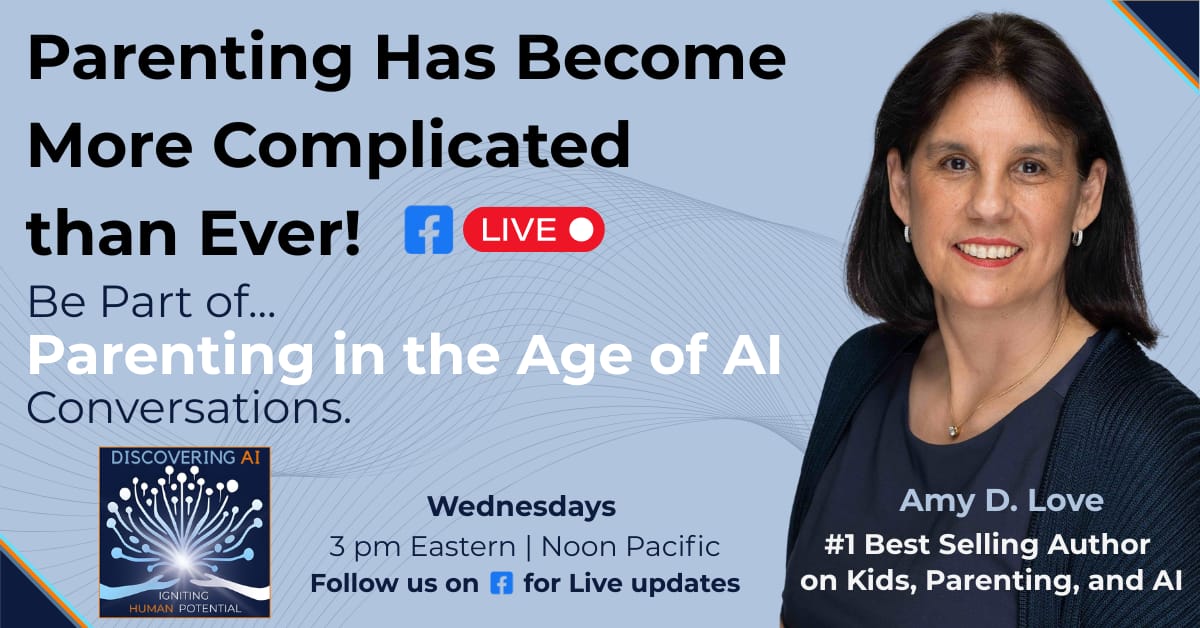
Continue the conversation by joining me live on Facebook every Wednesday at 3pm Eastern | 12pm Pacific for Parenting in the Age of AI.
In just 30 minutes, we’ll focus on clarity, confidence, and connection around topics that matter to parents, with practical guidance for families navigating AI at their own pace.
When families lead with clarity, technology follows with purpose.
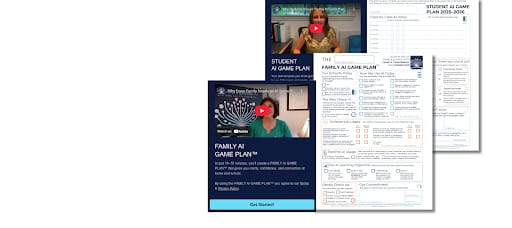
Download your free FAMILY AI GAME PLAN™ at DiscoveringAI.org
𝐃𝐢𝐬𝐜𝐨𝐯𝐞𝐫𝐢𝐧𝐠 𝐀𝐈: Igniting Human Potential
Want to learn more? Follow 💠 Amy Love 💠on LinkedIn or Facebook and subscribe to the DISCOVERING AI newsletter.